What to do with tea past its best-before date
A best-before date concerns expected quality under stated conditions. Look at the product and its history rather than treating the date as the only fact.
First read which date it is
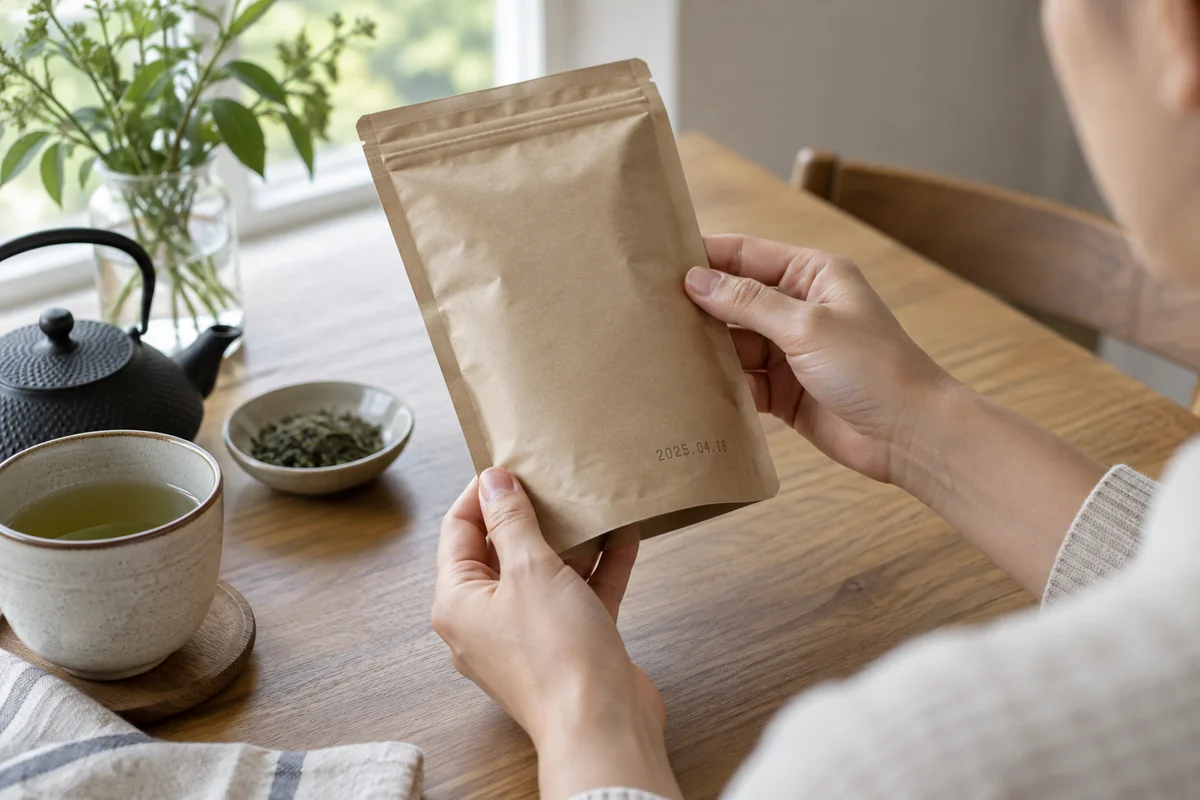
Best before and use by are not interchangeable instructions. A best-before date generally describes the period for which the unopened food retains its expected qualities under the stated storage conditions. Passing it does not automatically mean that the product is spoiled. A use-by date has a different safety purpose and should not be treated in the same way. Read the actual wording on the packet rather than deciding from the numbers alone.
For dry tea, the important next question is what happened to it. An intact packet kept in a suitable dry place is not the same as an open bag forgotten beside a steaming kettle. Look for a failed seal, moisture, pests, unusual clumping, or an unfamiliar musty smell. Visible mould or suspected spoilage is a reason not to taste the tea as an experiment. A printed date cannot compensate for conditions that have damaged the contents.
Separate lost character from a suspect product
Tea can become less interesting without suddenly becoming a completely different substance on one calendar day. A sound-looking packet may produce a flat or weakly aromatic cup that you simply no longer enjoy. That is a quality judgement. It does not require you to invent a precise extra shelf life, and it does not oblige you to finish the tea at any cost. Follow product-specific instructions and ask the seller when the condition or wording leaves you uncertain.
Do not apply advice for plain dry leaves automatically to every tea-related product. Blends can contain additional ingredients, and ready-to-drink beverages, concentrates, or products with dairy have their own storage and date requirements. Keep the original label so that you know what you are assessing. If the tea has been decanted into an anonymous jar, missing information makes the decision harder rather than giving you more freedom to assume it is fine.
Use the experience to buy better quantities
If packets regularly reach their best-before date untouched, reduce the number of open choices or the size of the next order. Write opening dates and put suitable older stock where you can see it. The aim is not to turn dates into a challenge to beat. It is to buy tea you will use in enjoyable condition and to make a sensible, product-specific decision when an overlooked packet appears at the back of the cupboard.