Decaffeinated is not the same as naturally caffeine-free
Decaffeinated tea and a naturally caffeine-free infusion answer different questions. Check the base ingredients before relying on a label.
Two routes to a different drink
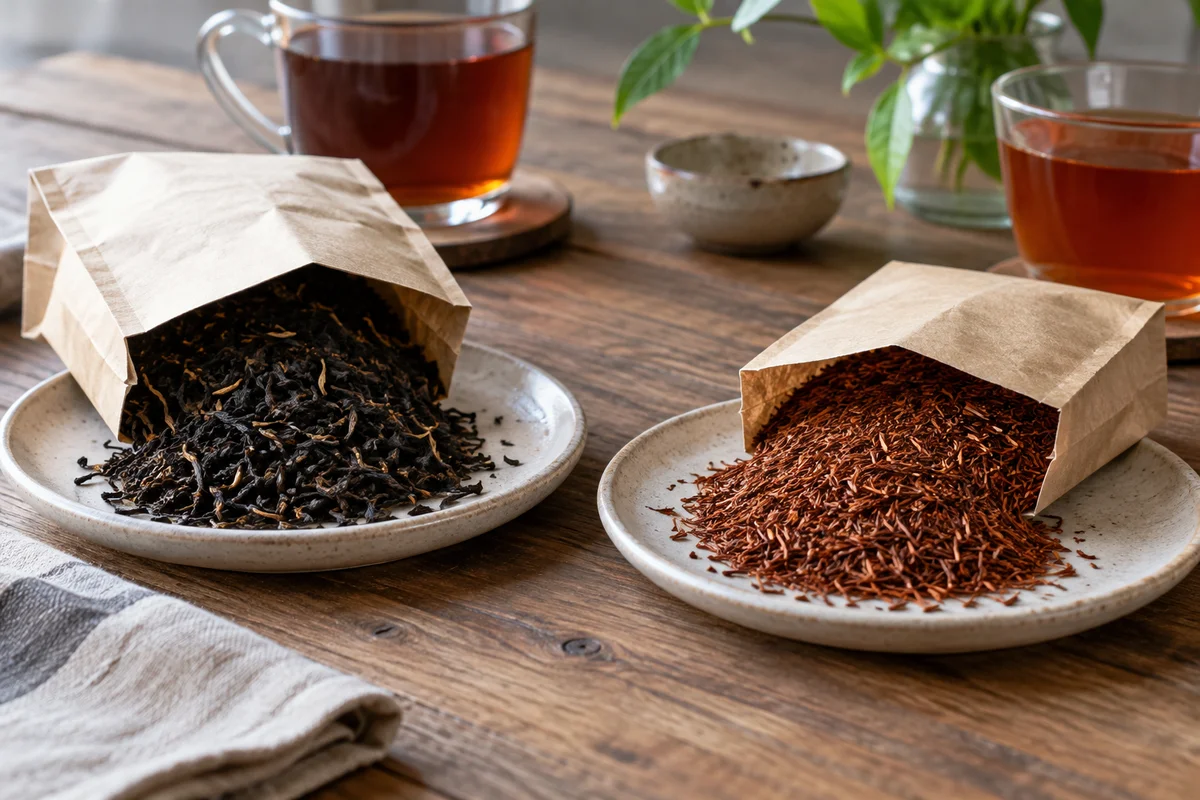
Decaffeinated tea begins as tea containing caffeine and undergoes a process to remove much of it. It should not be assumed to contain absolutely none. A naturally caffeine-free infusion is made from ingredients that do not naturally supply caffeine, such as plain rooibos or peppermint. The distinction matters when shopping, but it is not a complete instruction for anyone's individual health needs. If you have been told to avoid caffeine strictly, seek product-specific information and appropriate professional advice.
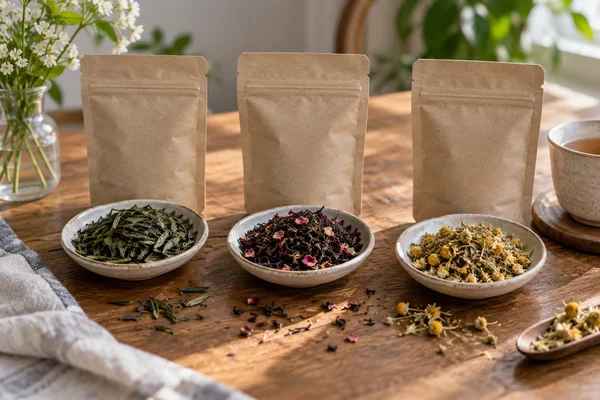
The broad word herbal is not enough on its own. A blend can include tea leaves, mate, or other caffeine-containing ingredients alongside herbs and fruit. Read the entire list rather than relying on the largest word or picture on the box. Likewise, green tea is not automatically a caffeine-free alternative to black tea, and a pale infusion colour does not prove a low caffeine content. Product identity comes before assumptions based on appearance.
Match the flavour you want to keep
If you enjoy a familiar black tea with milk, a decaffeinated black tea may be a more direct flavour comparison than a mint infusion. If you want a completely different evening drink, a plain naturally caffeine-free ingredient may be more appealing. Neither is a perfect substitute for every tea. Buy a modest amount and judge the actual cup rather than expecting a different product to reproduce every detail of your usual blend.
Read any description of the decaffeination method as product information, not as a shortcut to a medical conclusion. Avoid claims that one method makes every tea universally better or suitable for every person. If the seller provides a caffeine figure, check whether it relates to the dry product, a specified serving, or a particular test preparation. Numbers without their conditions can be misleading when your mug size and preparation differ.
Keep the wording when sharing tea
Do not relabel decaffeinated tea simply as caffeine-free when putting it in a communal tin or giving it to someone else. Preserve the original packet information so the next person can make their own decision. A clear distinction is more considerate than a confident shortcut. The aim is to choose a drink that fits your preference with an honest understanding of what the label does and does not establish.