Fresh aroma, faded aroma, and a suspect smell
A fading aroma is different from dampness or an unfamiliar musty smell. Use the whole packet’s condition, not one dramatic sniff.
Familiar does not always mean powerful
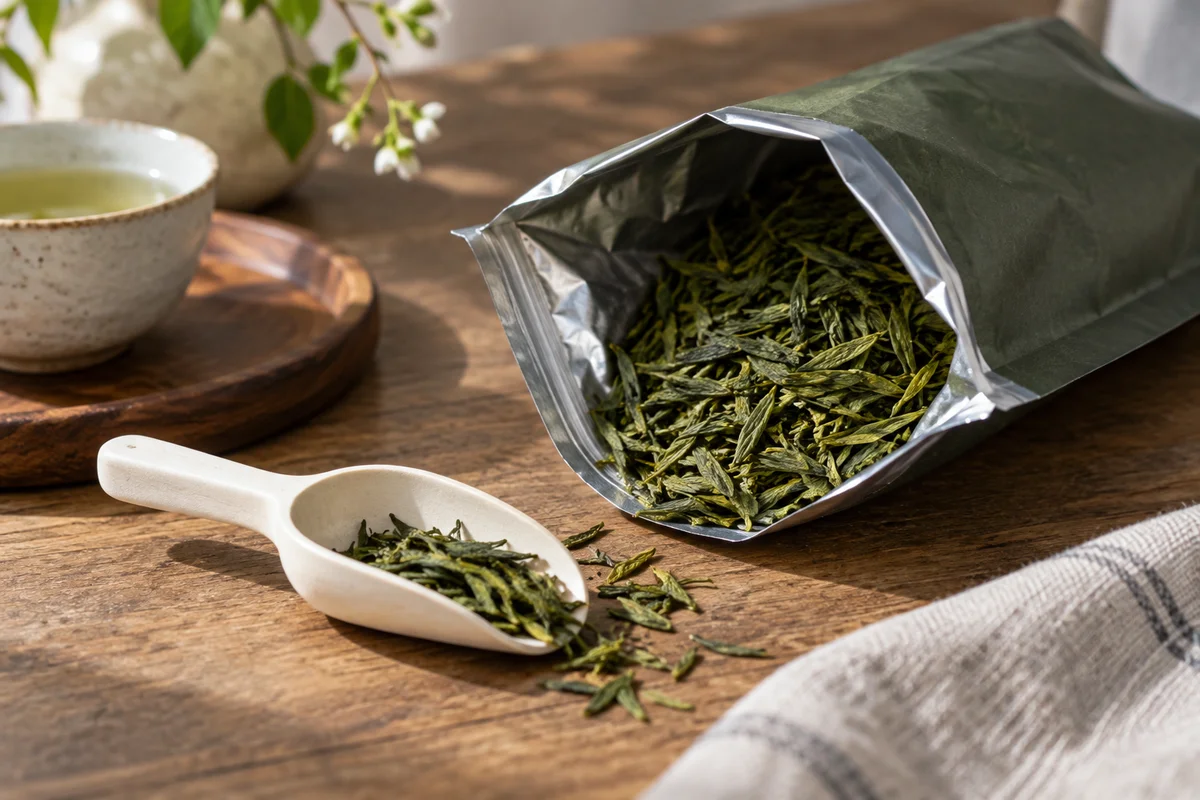
Fresh tea does not have one universal smell. A plain white tea may be quiet, a roasted tea warm and pronounced, and a scented blend deliberately intense. Judging all three by the loudest dry aroma rewards the wrong feature. Start with what the product is meant to be and, if you know it, how it smelled when first opened. A gradual loss of character is a different observation from a new, unpleasant odour.
Look at the packet before smelling deeply. Has the closure failed? Is there evidence of moisture, unusual clumping, pests, or a damaged inner lining? A dry product that has become damp should not be treated as an ordinary freshness puzzle. If you see mould or suspect spoilage, do not taste it to investigate. Keep the label and contact the seller when appropriate, especially if the problem appeared in a newly opened purchase.
For tea that appears sound but simply less aromatic, consider its history. A packet repeatedly left open near cooking smells may have lost character or picked up its surroundings. Tea in a large tin that is opened frequently can also change over time. These clues do not produce a laboratory diagnosis, but they help you decide whether to improve storage, buy smaller amounts, or ask a seller about the product's expected character.
Compare without forcing an answer
Use a clean, dry vessel and take a small amount out rather than repeatedly breathing into the storage packet. Smell the dry leaves at a comfortable distance. If the tea is suitable to prepare, follow its normal directions and notice the brewed aroma as well. A cup can reveal a muted flavour that was difficult to judge from the dry leaf alone. Do not add perfume-like ingredients to disguise a suspect smell.
When reporting a concern, describe the observation plainly: damp clumps, a damaged seal, an unfamiliar musty odour, or a much weaker aroma than a previous packet. Include the product name, batch details, and photographs where useful. Avoid declaring the exact cause when you cannot know it. A specific description gives the seller something to investigate and helps distinguish a product problem from an expected difference between tea styles or harvests.