Why a cold tea packet should stay closed first
Cold storage can create a moisture problem when a packet is opened too soon. Follow the tea maker’s guidance and let sealed packets acclimatise.
The risky moment is often the opening
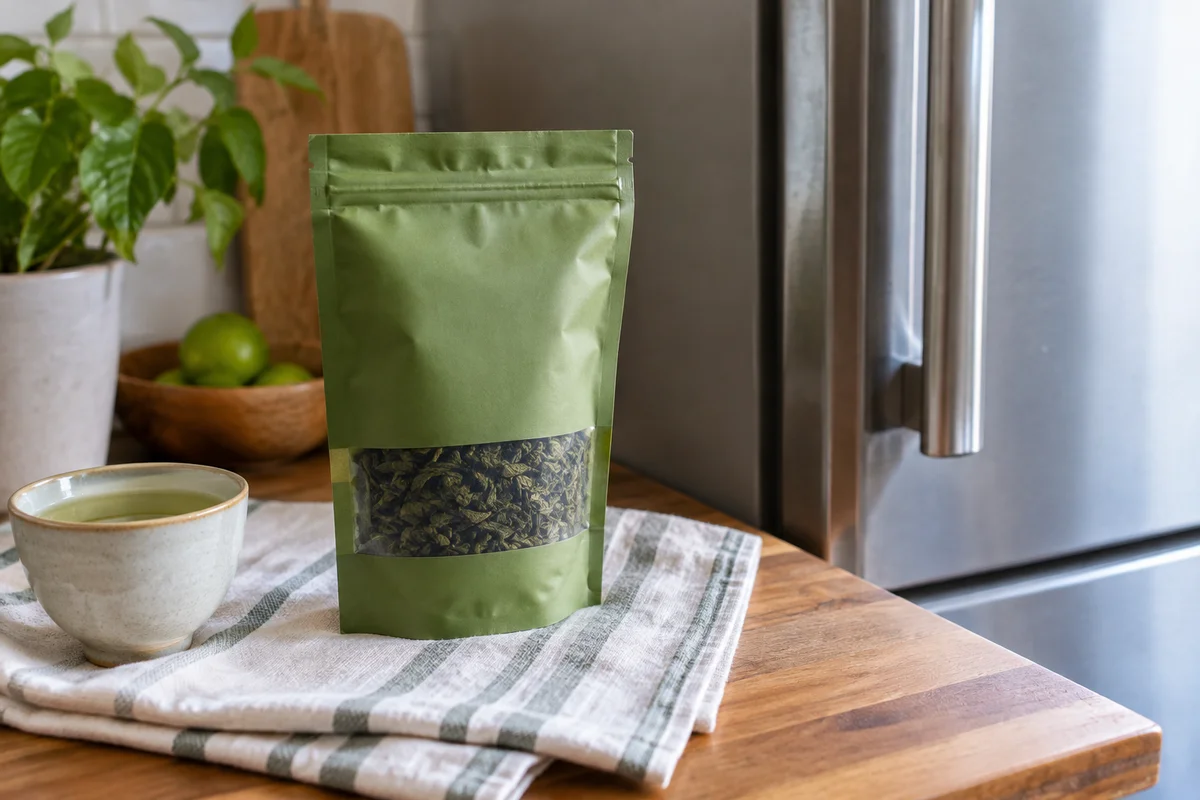
A cold packet brought into a warm room can collect condensation. If the tea is opened while still cold, moisture may reach material you intended to keep dry. That is why advice to store a particular tea cold must be read together with instructions for taking it out again. Simply deciding that colder is always fresher leaves out an important part of the handling. Ordinary room-temperature storage may already be the producer's preferred approach for daily use.
Do not put every tea in the refrigerator as a general improvement. Fridges contain humidity and strong food smells, and repeated trips in and out create a complicated routine. Follow the instructions for the exact product. Some producers give specific cold-storage advice for sealed reserves, while recommending a different arrangement once opened. Those details matter more than a broad rule borrowed from a discussion of matcha or another delicate tea you are not actually storing.
Keep a sealed packet sealed while it warms
If you are following suitable cold-storage guidance, remove the packet and let it reach room temperature before opening. The time required depends on the package and conditions, so follow any specific producer directions rather than treating a quick touch as a reliable measurement. Keep the outer package dry and away from direct heat. Do not accelerate the process by placing it beside a cooker, on a radiator, or in strong sunshine.
Plan the quantity so that you do not repeatedly chill and warm the same open supply. A small everyday portion and a properly sealed reserve may be practical where the producer supports that method. Label them clearly and use clean, dry utensils when dividing tea. If your kitchen routine makes these steps awkward, a smaller purchase stored as directed at room temperature can be a better choice than a theoretically ideal method you cannot maintain consistently.
Avoid turning uncertainty into an experiment
If a packet has become wet inside, developed unusual clumps, or acquired a suspect smell, do not assume that drying it out restores the original condition. Ask the seller for product-specific advice and do not taste material you suspect is spoiled. The purpose of storage is to preserve a drink you enjoy. It should not require guessing whether a complicated temperature routine has introduced the very moisture you were trying to avoid.