Check a tea gift beyond its pretty box
Keep ingredients and allergen information with a tea gift. A plain-looking blend can contain more than its name suggests.
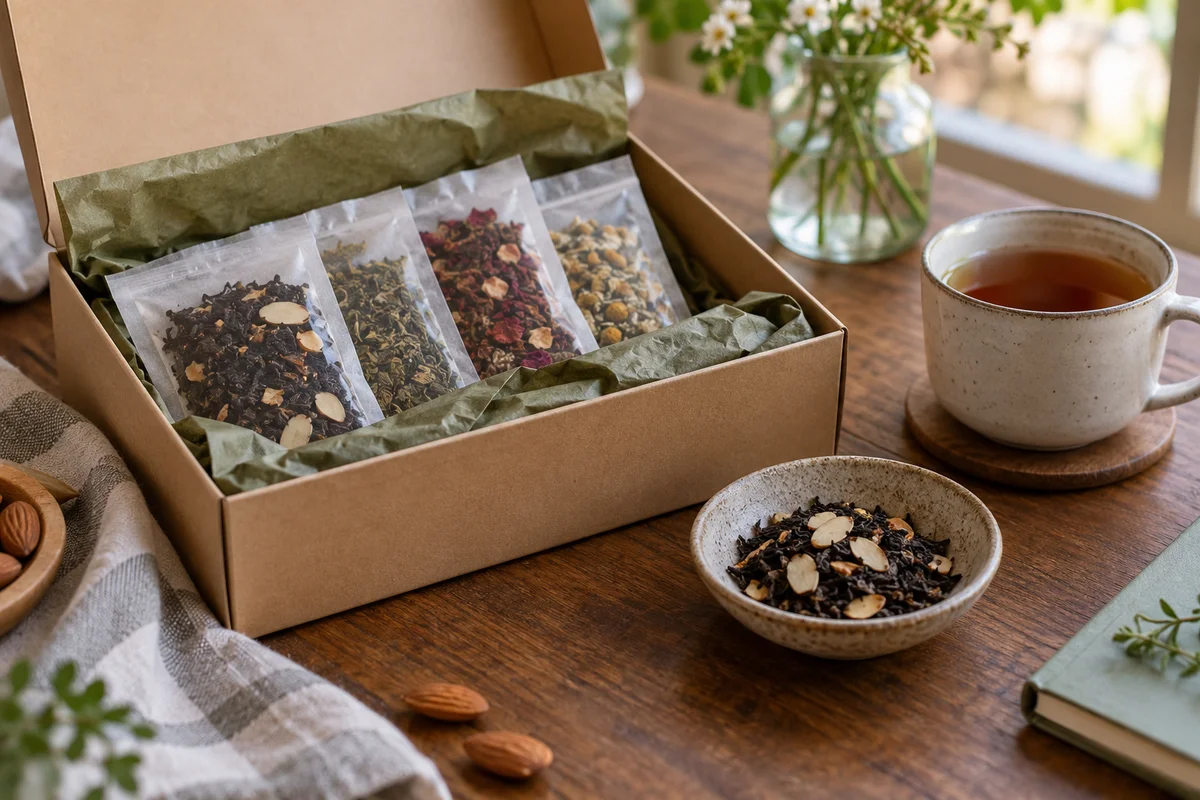
The gift box is not the ingredient list
A winter tea, almond biscuit blend, or creamy dessert tea can be a complicated food product rather than simply dried leaves. Its name may suggest some ingredients and conceal others. Before buying for someone with a known allergy or dietary restriction, read the exact product's label and relevant precautionary information. Do not infer suitability from the colour of the drink, the absence of visible nut pieces, or a general statement that a shop sells natural products.
Ask the recipient what information they need if you are unsure. It is more considerate to lose a little surprise than to give a packet they cannot assess safely. A preference, an intolerance, and a diagnosed allergy are not interchangeable, and you should not decide another person's acceptable level of uncertainty. If the label or seller cannot answer the relevant question, choose a different gift rather than interpreting silence as reassurance.
Preserve the manufacturer's information
Keep tea in its original sealed packaging whenever possible. A decorative outer box or fabric wrap can make it attractive without separating the contents from the ingredient list, batch details, and best-before information. If a gift set contains several different packets, check each one. A suitable plain tea does not make the adjacent flavoured blend suitable too. Do not assume that products from the same brand share identical ingredients or handling statements.
Adding biscuits, chocolate, honey sticks, or a homemade blend creates further things to check. Keep those foods separate and labelled. Using a shared scoop or an old tin can also introduce uncertainty, which is another reason to avoid repacking an allergy-sensitive gift. A clean-looking container is not evidence that it is appropriate for every recipient. The simple sealed product is often the more thoughtful option even if it looks less elaborate.
Let the recipient make the final choice
Include the product information without making a personal guarantee that the gift is safe for them. They may need to check it against their own advice or contact the manufacturer. Make it easy to decline or pass on the tea without embarrassment. If you cannot find a clearly suitable product, an unrelated gift or a shop voucher may be better. The value of a tea gift lies in being usable and considerate, not in persuading someone to take a chance for the sake of politeness.