Make a resealable tea pouch work properly
A zip pouch protects tea only when the channel is clean and fully closed. A quick pinch in the middle is not always enough.
Inspect the opening you actually use
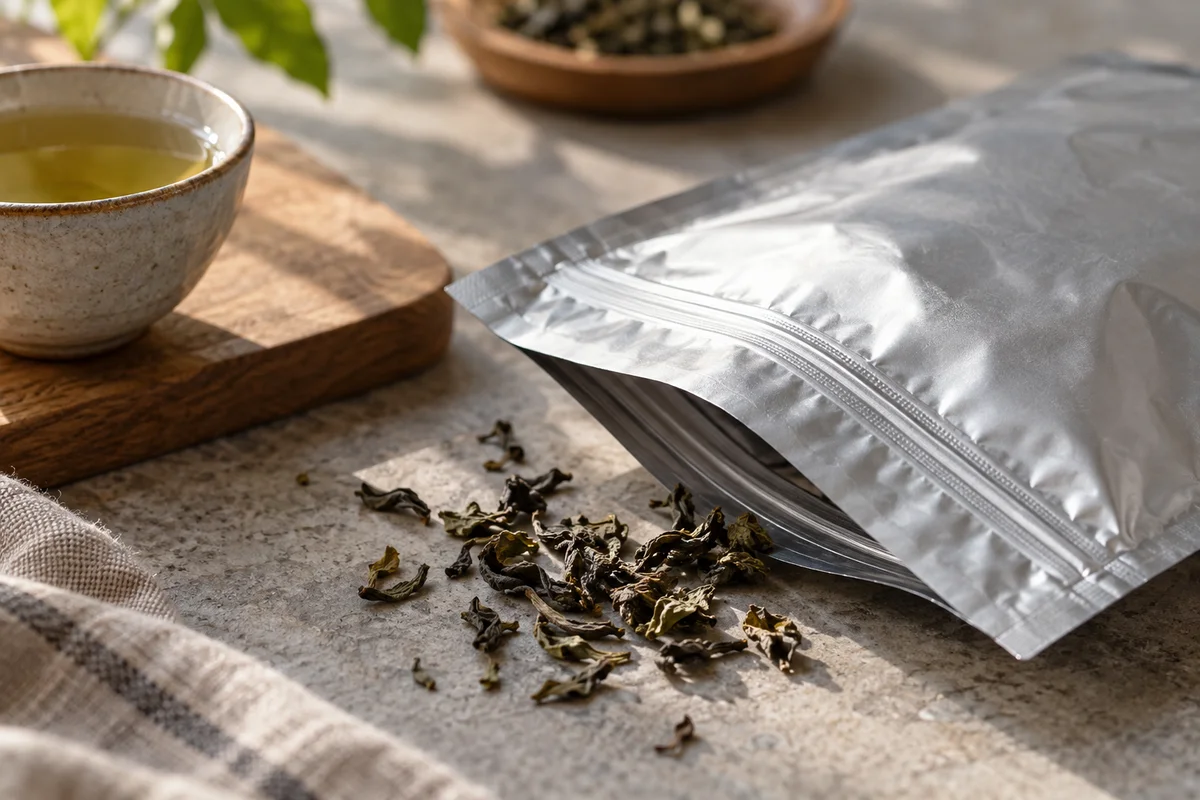
Many tea pouches have a tear strip above a reusable zip. After opening a new packet, check that you have not cut through the part intended to close again. Keep the top wide enough to handle without spilling leaves. The first opening is a good moment to read the storage instructions and retain any label that might be removed with the outer sleeve. A packet is easier to use well when its practical features are understood before the tea routine begins.
Dry leaf fragments can sit in the zip channel and prevent a complete closure. Look along the track before pressing it shut, especially with small broken leaves or powder. Remove trapped material with a clean, dry method rather than blowing moisture into the packet. Then press the closure from one end to the other and check the whole width. A satisfying click at one point does not prove that the corners are closed.
Keep steam outside
Measure tea away from the rising steam of the mug or kettle. Close the pouch before pouring hot water, not after the cup has been made and carried elsewhere. This simple order reduces the time the contents spend open in a humid spot. Use a dry spoon, and keep the packet upright on a dry surface while working. A pouch that becomes wet around the opening needs attention rather than being folded closed and forgotten.
Do not assume that every attractive paper bag is a long-term protective pouch. Construction varies: some have an inner barrier and a proper closure, while others are mainly presentation packaging. Follow the seller's instructions. If the closure is damaged or no longer dependable, move the original packet into a suitable container or transfer the tea with its identity preserved. The aim is reliable protection, not loyalty to the packaging in which the tea arrived.
Make the last portion easy to reach
As the pouch empties, avoid crushing it so aggressively that the leaves break unnecessarily or the zip becomes distorted. Fold or roll only as the package design permits. Keep the tea in a dry, shaded place and check the seal after each use. A modest packet used carefully can be more practical than an expensive tin whose lid is routinely left loose. Consistent handling is what gives the closure its value.