Build a tasting set that teaches you something
A useful sample set answers a question. Start with a few deliberate contrasts instead of collecting every unfamiliar name.
Decide what you want to discover
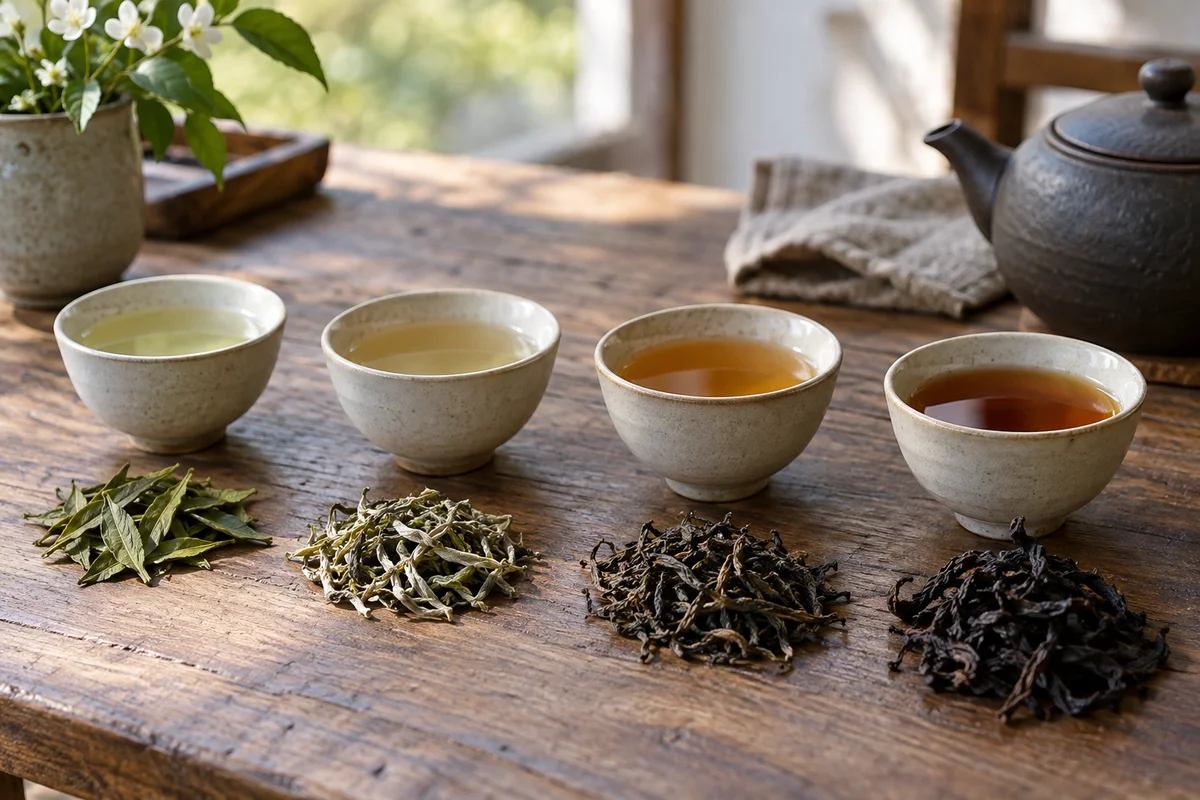
There are two quite different reasons to buy samples. One is to find a dependable daily tea; the other is to explore something unfamiliar. Mixing those aims can produce a basket full of interesting teas without anything you want at breakfast. Write down the question before shopping. You might want a black tea that works without milk, a less grassy green tea, or a floral cup without added flavouring. That question gives the set a useful boundary.
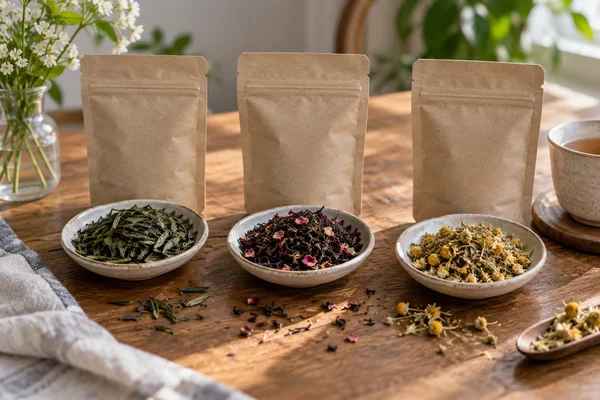
Choose three or four samples with a clear reason for each. One familiar tea provides a reference. A second can change one noticeable feature, such as roast or leaf style. A third can be a more adventurous choice. Ask for enough of each to make it on more than one occasion. A single tiny serving may be exciting, but it does not leave much room to correct a poor first preparation or discover that your preference changes with the setting.
Avoid making the tasting into homework
You do not have to drink every sample side by side. Two teas on the same afternoon can give a clearer comparison than six cups becoming cold together. Keep the original packets close to the cups so that names and instructions do not become detached. Use a short note in ordinary language: sweeter aroma than taste, pleasant after food, or too drying for me. The point is to remember your reaction, not to imitate a professional tasting sheet.
Give an uncertain tea a second chance under reasonable conditions. Check the seller's directions, the quantity you used, and whether the water or mug introduced an unwanted smell. Do not spend the whole packet forcing a tea to become something else, though. If its central character is what you dislike, a different style is a better next step than endless adjustments. A sample that rules something out has still been useful.
Finish with a smaller shortlist
At the end, choose one tea to buy again and one question for the next set. Keep a photograph of the packet or its full name so that you can find the same product. Buying every sample in a large size defeats the purpose of the exercise. A gradually clearer sense of what you enjoy is a better result than a rapidly expanding shelf.